Valorant spoofer, what an HWID changer does and how the advertised tool works
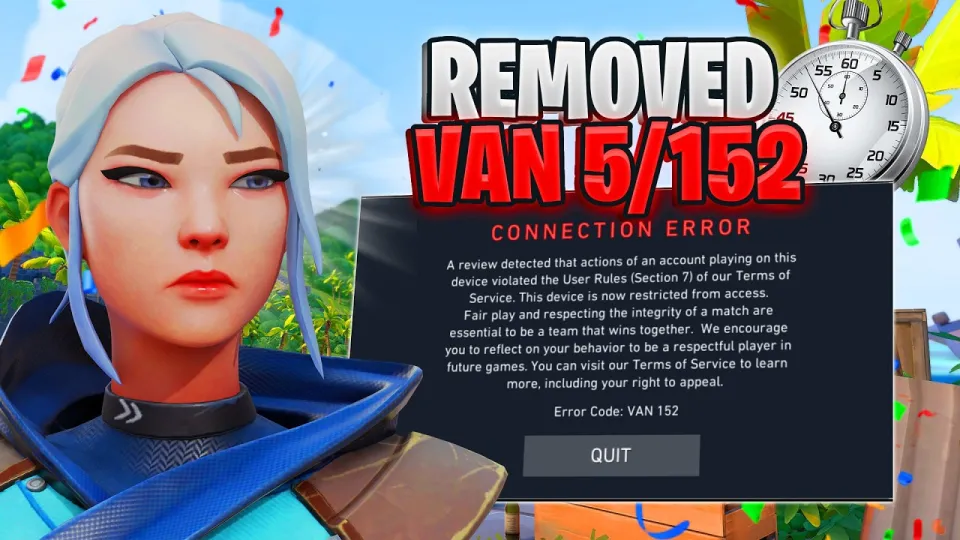
Video: This Valorant HWID Spoofer Actually Works… Full Showcase (Valorant Spoofer)
· based on the channel medi__posh
A Valorant spoofer is a tool that changes the hardware identifiers — drive serials, motherboard and BIOS strings, MAC addresses, SMBIOS data — that Riot's Vanguard anti-cheat uses to recognise a specific PC. Its purpose is to make a hardware-banned machine look like a different computer so a new account can log in. The tool promoted in the showcase video from the medi__posh channel, sold through the S.W.R. Solution product page, claims exactly that: a loader-based spoof completed in roughly two minutes, followed by a normal Valorant launch.
What a Valorant HWID ban actually is
A hardware ID ban is a punishment tied to the machine rather than the account, and it is the reason a spoofer exists at all. When Riot bans an account for cheating, the enforcement system can also record a fingerprint of the PC — disk serial numbers, volume IDs, motherboard and BIOS identifiers, the machine GUID, network adapter addresses and similar values — and refuse new accounts created or played on that same hardware.
The practical consequences are severe: a player who has been hardware banned cannot simply register a fresh Riot ID, because the new account is flagged on first launch. That is why demand for "valorant hwid unban" and "hwid changer" searches stays high even though the practice violates Riot's terms of service. It is worth being precise about the cause as well: hardware bans in Valorant are not handed out for a single bad game or a chat report — they follow detected cheat software, and the account ban usually comes first.
How the advertised spoofer is presented
The showcase walks through a five-stage flow: installation of the loader, configuration, the spoofing process itself, and then launching Valorant. The vendor's description summarises the pitch in a handful of claims:
- Instant HWID spoofing with a single run of the loader.
- A setup that takes around two minutes, start to finish.
- Compatibility with all current Windows versions.
- A "perm" spoof, meaning the changed identifiers are meant to persist rather than reset on reboot.
- 24/7 support through a Discord server.
The commercial model is typical for this niche: a paid product page at swrsolution.xyz, a Discord community for delivery and support, and marketing built around the phrase "best Valorant spoofer" plus the promise of getting back in-game "in minutes". None of these claims are independently verifiable from the video itself, and the showcase does not demonstrate a hardware-banned machine successfully playing on a new account over time — it demonstrates the tool running.
What spoofers change under the hood
Most consumer HWID spoofers work at the Windows user level, hooking or patching the APIs that return hardware information. A typical feature list includes:
- Disk identifiers: serial numbers and volume IDs for each physical drive.
- SMBIOS and motherboard data: BIOS vendor strings, baseboard serials, system UUID.
- Registry machine GUID: the Windows installation fingerprint.
- Network adapters: MAC addresses on physical and virtual interfaces.
- Peripheral and monitor IDs: less commonly, EDID and device instance paths.
The critical limitation is architectural. Vanguard runs as a kernel-level driver loaded at boot, and it can query hardware directly rather than through the user-mode APIs a spoofer patches. It also builds behavioural and statistical fingerprints — timing patterns, installed driver sets, disk geometry, even the arrangement of partitions — that survive a cosmetic identifier change. This is why spoofers in competitive titles tend to have a short useful life: they work until the anti-cheat vendor updates detection, and the cat-and-mouse cycle repeats.
The real risks of using a Valorant spoofer
Buying and running a spoofer carries costs that the marketing never mentions. The first is account risk: Riot treats ban evasion as a separate violation, so a spoofed machine that is detected can result in the new account being banned as well, along with any skins and currency purchased on it. The second is financial: spoofer vendors operate outside any consumer protection framework, subscriptions lapse, loaders get taken down, and refunds are effectively discretionary.
The third risk is the software itself. Loaders in this market are distributed as executables that request administrator rights and often ask users to disable antivirus or Windows Defender before running — precisely the conditions under which infostealers and crypto-miners are deployed. Running an unsigned kernel-adjacent tool from a Discord link on your main PC is a genuine security exposure, independent of whether the spoof works.
Legitimate alternatives if your hardware is flagged
There is a slower but safer route for players who believe a hardware flag is a mistake. Riot Support handles appeals for account bans, and a wrongly flagged machine can be reviewed through a ticket rather than a spoof. Practical steps:
- Submit an appeal through Riot Support with your Riot ID and a clear description of the situation.
- Do not create new accounts on the flagged hardware while the appeal is open — that can be read as evasion.
- If you share a PC with a banned player, document it; household and shared-machine cases are reviewed individually.
- Keep the machine clean: remove any cheat software, and avoid "unban service" offers that ask for account credentials.
For most players the honest answer is that a hardware ban is difficult to reverse and buying a spoofer trades a small chance of playing again for money, malware exposure and the likelihood of another ban.
Where to find the tool and its support channel
The product page and the community server are the only two official links attached to the showcase. The purchase and setup link is S.W.R. Solution — Valorant spoofer purchase and setup, and support is handled in the vendor's Discord at discord.com/invite/swrsolutionv3. Both are third-party destinations unrelated to Riot Games; treat any request for your Riot password, 2FA code or a remote session on your PC as a red flag.
Summary
The medi__posh breakdown presents a loader-based Valorant spoofer that claims to rewrite hardware identifiers in about two minutes and clear a hardware ban, sold through swrsolution.xyz with Discord support. Mechanically, such tools patch user-mode hardware APIs, while Vanguard operates at kernel level and can fingerprint a machine in ways a spoofer does not address. The realistic outcome is a short window of access at best, plus account, financial and malware risk. If you want the vendor's own pitch and setup instructions, the product page is here: get the spoofer and setup guide.
Key takeaways
- An HWID spoofer rewrites the hardware identifiers Vanguard uses to link a machine to a banned Valorant account.
- The advertised tool on swrsolution.xyz claims a full spoof in about 2 minutes via a loader, with Discord support.
- Vanguard is a kernel-level anti-cheat, so it can inspect raw hardware data that user-mode spoofers never touch.
- Riot's terms prohibit circumventing bans; detected spoofing can lead to new bans and lost purchases.
- HWID bans in Valorant are usually issued for cheating or repeated serious violations, not for a first-time mistake.
Source: This Valorant HWID Spoofer Actually Works… Full Showcase (Valorant Spoofer) · Markdown version
Questions & answers
Does a Valorant HWID spoofer actually unban an account?
No. A spoofer does not touch the banned account — that ban is permanent in practice. It only attempts to change the hardware fingerprint so a new account can be used on the same PC, which is ban evasion under Riot's terms and can result in the new account being banned too.
How long does the advertised setup take?
The vendor claims a full installation, configuration and spoof in roughly two minutes, followed by a normal Valorant launch. The showcase video follows the same order: install the loader, configure it, run the spoof, then start the game.
Why do spoofers stop working after a while?
Vanguard runs at kernel level and can read hardware data directly, plus behavioural and statistical fingerprints that a user-mode identifier change does not alter. When Riot updates detection, previously working spoofers get flagged, which is why the market cycles through new versions constantly.
Is it safe to run a spoofer downloaded from Discord?
There is real risk. These loaders typically request administrator rights and ask you to disable antivirus, which is the same profile as infostealers and miners. They are unsigned third-party executables with no consumer protection, so a spare machine — never your main PC — is the minimum precaution.